




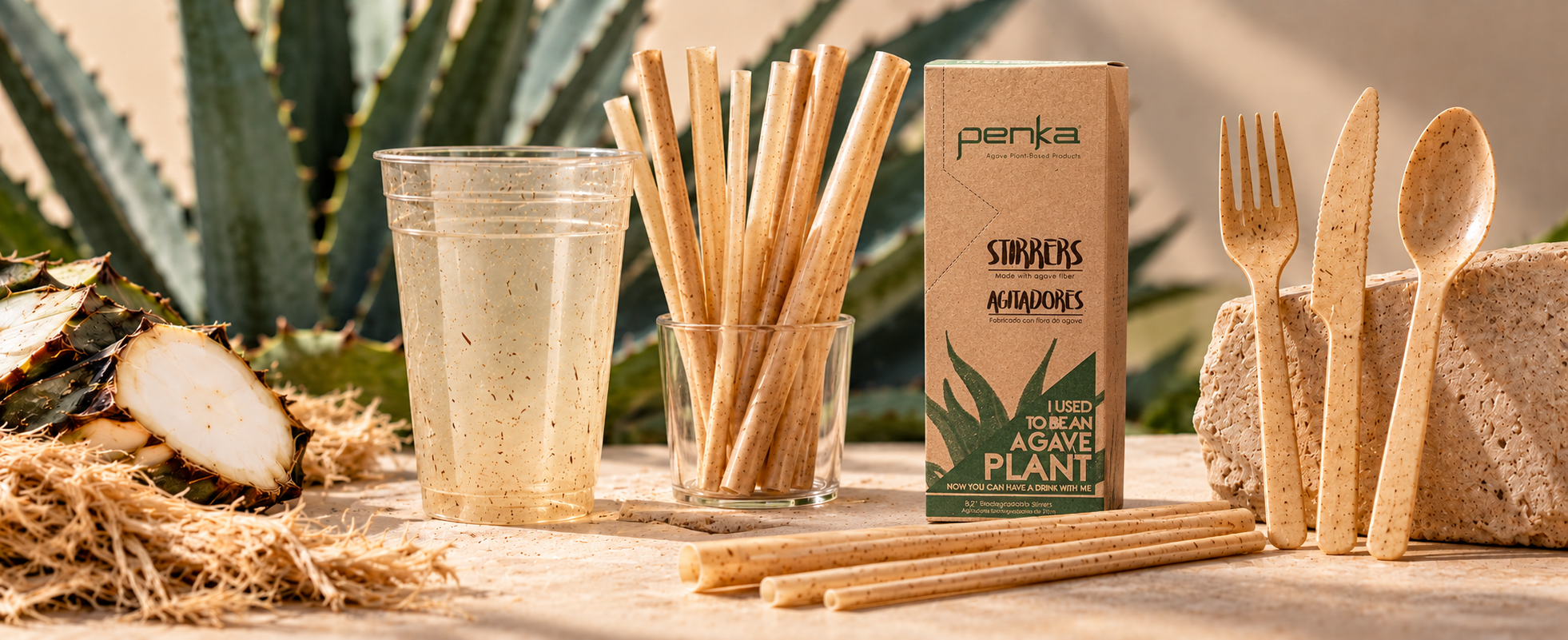
There is something that happens when someone picks up a product made with PolyAgave PP30 for the first time. They don't analyze it. They don't read the label. They don't look for a certification logo. They touch it.
And what they feel is not plastic.
The texture is different. It is slightly rough, warm, and has weight. The natural color is brown, with veins reminiscent of wood. The agave fiber is visible to the naked eye, integrated into the piece as if the plant were still there, present in every millimeter of the object.
That first sensation is not a minor aesthetic detail. It is the most powerful argument this material has, and it is the only one that no conventional plastic can copy, because to have it, you must have the plant inside.
In product design, appearance and texture communicate before any words are spoken. An object that feels natural triggers a perception of quality, care, and origin, before the user consciously processes any rational information.
This has direct consequences on how a brand is perceived.
A clear plastic straw says nothing about the person serving it. A straw with visible agave fiber, natural brown color, and organic texture says that whoever chose it made a conscious decision about the materials they put in their customers' hands. It doesn't say it with words. It says it by being what it is.
The appearance of products made with PolyAgave is genuine. It is clear and noticeable that these products contain agave content. You can see that a product made with PolyAgave contains plant matter. That visibility is not an accident of the process: it is part of what the material is. The appearance of products made with PolyAgave is very genuine, and it is clear that these products contain agave content.
In a market where greenwashing abounds and consumers are increasingly skeptical of green labels that cannot be verified, a material that shows its origin at a glance has a credibility that no certification alone can match. Certification supports. Texture demonstrates.
The PP30 technical data sheet describes it precisely: the natural color is brown and offers a wood-like texture to the final product.
Wood is a reference that anyone in any culture recognizes as natural, durable, and plant-based. It requires no explanation. It needs no communication campaign. When someone picks up cutlery or a straw with that texture, the association happens immediately and intuitively.
And that association does brand work all on its own.
For a signature restaurant that cares about every detail of the experience: the texture of the cutlery is part of that experience. For a home goods brand that wants to differentiate itself visually at the point of sale: the wood-like finish distinguishes the product on the shelf without the need for an additional label. For a mezcal or tequila bar that serves with agave straws: the coherence between what is in the glass and the material used to consume it is pure narrative, without words.
The visible texture of the agave broke with the aesthetic of conventional plastic and generated questions, curiosity, and dialogue. The straw ceased to be a disposable object and became a vehicle for storytelling.
That is what happened at Mundo Mezcal when Penka presented its products. Attendees did not receive an explanation of what the material was. They saw the texture, touched it, and asked questions. The object started the conversation all by itself.
The natural finish of PP30 isn't the only path. The material can be pigmented using standard colorants, opening up a possibility that few plant-filled materials offer: maintaining the natural attributes of agave in the product's structure while adjusting the color to align with a brand's visual identity.
This is relevant for companies working with strict visual identity systems, where the natural brown color of PP30 might not fit directly, but where the material's attributes remain the right differentiator. The manufacturer can choose the color. The texture and plant content remain.
It is the difference between a material that imposes its own aesthetic and one that adapts to its client's without losing what makes it distinctive.
Certifications are necessary. FDA approval under CFR 21.177.1520 for the resin and CFR 186.1673 for the natural fibers ensures safety for food contact. USDA Biobased certification under ASTM 6866 verifies a plant-based content of over 30%. BPA and heavy metal-free. 100% recyclable.
Those facts support the purchasing decision. But they aren't what the end customer experiences.
What the end customer experiences is the object in their hand. The temperature of the material to the touch, slightly different from conventional plastic. The weight, just perceptibly distinct. The surface, with that subtle variation that smooth plastic never has. And the color, which needs no explanation because it speaks for itself: this comes from a plant.
The texture, color, and the story of the plant remain present in every piece, like traces of the circular process that created them.
In a context where consumers seek authenticity and are increasingly capable of distinguishing it, that physical trace is a communication asset that cannot be manufactured with marketing. You only have it if the material truly is that way.
PolyAgave PP30 is designed for injection molding processes, with an operating temperature between 140°C and 190°C and processability on conventional industry equipment. This means that a company already manufacturing polypropylene products can incorporate it without changing their machinery.
Its applications include housewares, toys, promotional items, caps, and auto parts. Any category where the visual and tactile finish of the product influences the end user's purchasing decision is a category where the natural texture of PP30 works in favor of the brand.
The segments where this argument is strongest are precisely those that have suffered most from the saturation of products claiming to be natural without actually being so: household goods, kitchen utensils, hospitality products, purposeful promotional items, and premium packaging with brand identity.
In all these contexts, the difference between a product that claims to be natural and one that feels natural is the difference between a promise and an experience.
There is something more to this material that goes beyond technical properties and visual finish: agave has identity.
It is Mexico's most recognizable plant. It is in the landscape, in the culture, and in the country's most representative beverages. Incorporating it into a product is not just a material engineering decision: it is a decision of identity.
For Mexican brands, this carries particular weight. A product that contains agave in its composition also carries a cultural reference that no imported plastic can have. And that reference is visible, tactile, and present in the object itself.
For international brands working in the Mexican market or those wanting to communicate origin and authenticity, the argument is equally solid: the material tells a story of place, of plant, and of process that the user can see and touch without needing to read any label.
In mature, saturated markets, differentiation rarely comes from function. Functional products are everywhere. What is scarce are products that create a distinctive sensory experience while also having a verifiable origin story.
PolyAgave PP30 has both. The wood-like texture and natural brown color are not a byproduct of the process: they are the result of agave fiber actually being there, in the piece, in the proportion certified by the USDA, visible and palpable.
That is not a marketing claim. It is a material fact.
And the material does not lie.
Learn more about our straws.


.png)


